


%20Net%20Yields.svg)


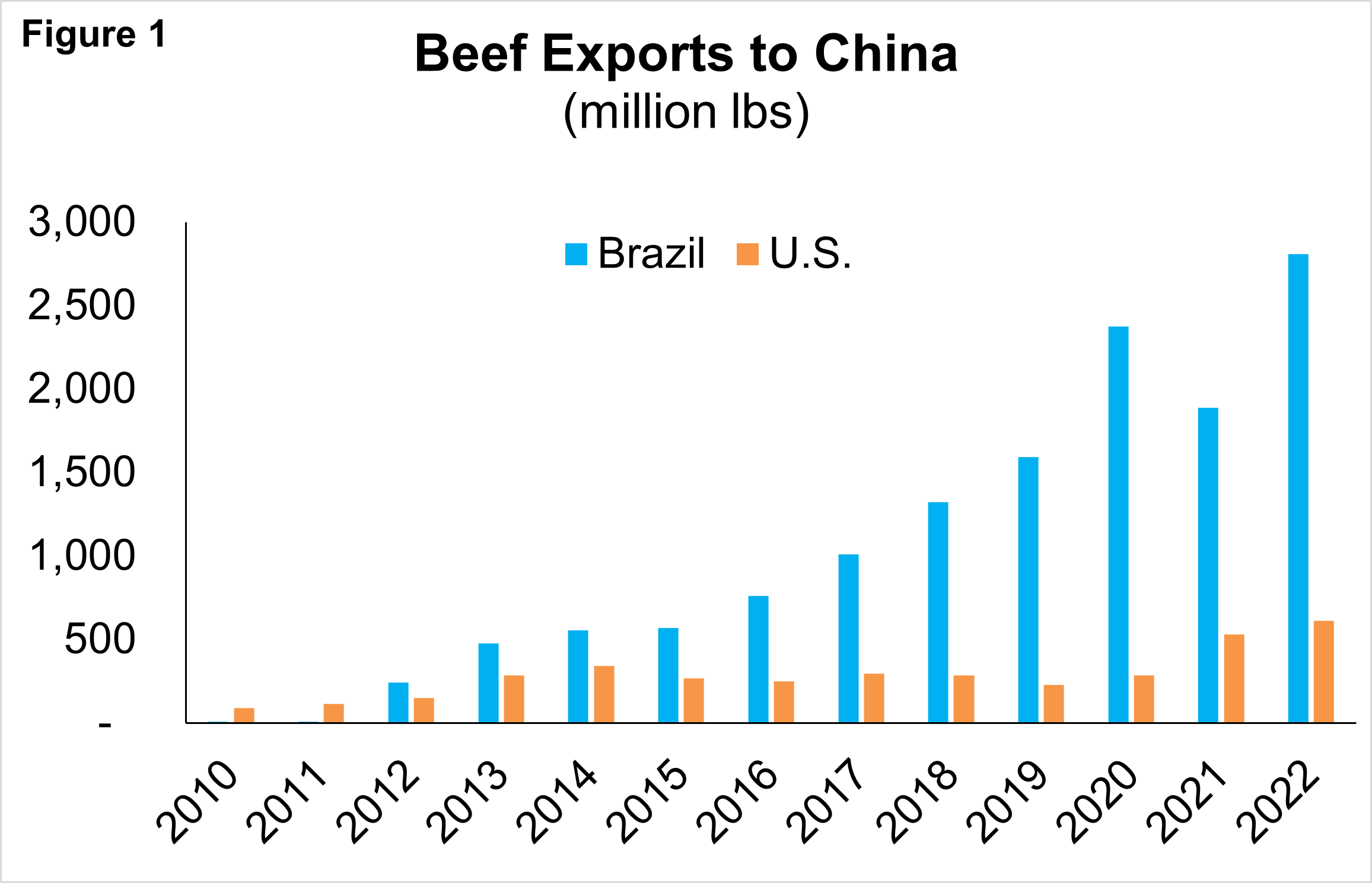
Suspending beef imports from Brazil could lead to greater demand for U.S. beef. Figure 1 shows historical beef export volumes to China from the U.S. and Brazil. The U.S. exported greater quantities to China as recently as 2011. However, the dynamic has completely shifted and Brazilian beef exports to China have dwarfed the U.S. in recent years. The U.S. exported a record 600 million pounds of beef to China in 2022, which was only 22% of what Brazil exported. Still, the last time mad-cow disease was discovered in Brazil was 2021. It resulted in a four-month export ban and contributed to the 21% year-over-year decline in Brazil’s beef exports to China. At the same time, U.S. beef exports to China increased 87% yoy in 2021. An extended suspension on Brazilian beef could therefore cause China to look elsewhere to source imports from.
A contraction of the U.S. beef sector will limit the ability of U.S. producers to backfill China’s supply gap. Total beef cattle inventory declined by 2.8 million in January relative to last year. This was the largest decline since 1989 and is attributable to several factors including high feed prices and drought conditions. The ongoing drought across the southern and western plains has caused a decline in pasture conditions and led many producers to sell their cows. Producers may choose to expand their herds again if the ban on Brazilian beef leads to an uptick in export demand and prices for U.S. beef. However, there is a considerable lag associated with expanding beef production in comparison to other livestock sectors.
Related Insights


Refinancing Dilemma: Lender & Borrower