


%20Net%20Yields.svg)


The fortunes of the agriculture industry often have a relationship with global economic trends as it relates to export markets. To some degree, expenses and interest rate levels can also be sensitive to global dynamics. The year 2024 is significant as a timeline to the quarter-century mark. Super global trend disruptors that may have an impact on agricultural strategic plans are appearing on the radar screen as we journey through the year.
Elections
While many in the U.S. are focused on the upcoming presidential election, one must be aware of the global elections. Over one-half of the world’s population will experience a major election in 2024. Taiwan recently completed their election, along with Russia. For the most part, the Russian elections were easy to predict. India, the most populated country in the world, has a popular leader who in all likelihood will be reelected.
However, the elections in Mexico, one of the United States’ major trading partners, should to be closely monitored. The bottom line, regardless of the outcomes, agriculture trade negotiations will be in a state of flux, which can impact market access and prices. Whether it is supply chains, global shipping lanes, or the status of the existing and potential new conflicts, extreme volatility will be a constant. A game plan of financial resiliency and agility built on execution and monitoring of business practices positioned to capitalize on positive outcomes may be the call to order.
Transition
The transition of wealth appears set to accelerate as baby boomers and previous generations age out. It is estimated that $68 trillion of wealth in the U.S. economy will transition between 2024 and 2040. As a result of the demographics in the agriculture industry, well over $3 trillion in assets could lead the charge in this transition. Women who have accumulated wealth and investments through retirement programs and businesses currently own about one-third of this wealth. As a result of longer longevity, the proportion of wealth controlled by women could shift to two-thirds by 2040. In the agriculture industry and in rural areas, land transfer and negotiations on rental ground and leased assets involving women may be critical. By the decade of the 2040s, more agriculture businesses are likely to be owned and managed by women. Regardless of gender, many producers will be in family businesses, entrepreneurial startups, and some individuals will be returning to agriculture and their rural roots to drive energy and the ownership of businesses.
Transition management in any type of business is a marathon, not a sprint. Successfully transitioning a business often requires following a process and assembling a team of advisors to navigate critical points along the way.
Globalization versus de-globalization
The forces are in place for the movement toward de-globalization. Approximately one dollar out of every five dollars of U.S. farm revenues are generated by our export markets, which are set to be in the crosshairs of this trend. With expanded acreage and productivity, South America could shift North American production to second status globally, depending on the commodities. Our global trading partners may seek supply from South America or the Southern Hemisphere first, then North America if sufficient supply does not exist. Of course, geopolitics, currency exchanges, and weather could be critical factors as this trend evolves. In most areas, U.S. agriculture still holds an advantage to maintain competitiveness due to innovation and resource management. In the future, one may expect global economic blocs, such as North America, Europe, Asia, and the Southern Hemisphere, to form and collaborate with each other for a competitive edge.
The dollar and a new digital currency
The year 2024 is set to host a watershed event where the BRICS nations (Brazil, Russia, India, China, and South Africa) along with Iran, Saudi Arabia, and others, meet to move forward with a possible new currency to compete against the U.S. dollar. This new currency could impact world and agricultural trade, which often occurs in dollars. Currently, 58% of global trade moves through the dollar. In recent years, the New Development Bank and the Asian Infrastructure Investment Bank were formed as an alternative to the International Monetary Fund (IMF) and to reduce the dependence on dollar dependent exchanges and funding. Some of the emphasis on these financial institutions was a result of China's Belt and Road Initiative, which is designed to expand China’s global economic influence. This program has made over $1.3 trillion in investment loans in nearly 70 countries around the globe since 2013. While it may be difficult for these countries to come to a consensus, any weakness in U.S. monetary and fiscal policies, overall deficit, and debt levels could increase the progress of a new currency.
The diffusion of innovation
In recent years, the movement from fossil fuels to green energy and the use of artificial intelligence (AI) have been top of mind for global leaders and some segments of society. Any innovation and technology typically evolve through three stages in the diffusion process.
The first stage is infatuation, which began at the beginning of the decade of the 2020s and was accelerated by the pandemic. Extreme weather manifested the green energy movement and heightened its prominence in geopolitical agendas.
However, the disjointed global effort and economic competitiveness with unintended consequences are quickly moving these trends into the second stage, disillusionment. For example, the backing of farms and farming practices has risen in the Netherlands. In Germany and France, farm protests over green energy, increased regulations, and the additional cost burdens are happening in large numbers with support of agriculture by the general public. Now, similar scenes are playing out in Spain and Italy.
In the United States, the use of AI to build efficiency in data collection and information is resulting in white-collar layoffs. The use of AI is rippling through the business industry and government. The next few years will be an era of critical thinking on the pros and cons of unintended consequences of these game changers in the business industry, economics, and mental health of society in the U.S. and globally.
Later in the decade, we should transition to the regenerative or reorientation stage, which would be a balance of moving forward and acceptance of some of these aspects in business society as the journey emerges.
Conclusion
Whether it is to a board room, ownership and management decisions, or day-to-day activities, these disruptors could create challenges, but also opportunities, in the agriculture industry. In the past, biotechnology in the crop and livestock sectors and engineering efficiencies in machinery, equipment, and facilities were game changers in agricultural strategic plans. Whether it is building on the past or in the future, successful agribusinesses must think globally and act locally, manage the controllable variables with intense focus, and manage around the uncontrollable variables with agility, resiliency, and nimbleness. A strong business and financial IQ along with monitoring changes in societal and consumer trends will be part of the recipe for success.
Global Economy
The global economy continues to be outperformed by the U.S. economy. China, the second-largest economy in the world, is projected to grow at 5% in 2024.
China's economic headwinds include demographics due to 35 years of the one-child policy. If China’s population over 60 years of age is segmented out, it would represent the fifth largest population in the world. Often, grandparents and parents live in rural areas while their grandchildren seek employment and amenities in urban areas. This is creating a void in healthcare provided by families in China and the aging population is an economic drag on social programs due to the increased healthcare costs.
Despite some of the recent economic incentives by the government and a reduction of banking capital requirements, real estate and equity markets continue to struggle with de-valuation. This hinders household wealth, particularly because 80% is focused on home equity by private citizens.
Recent visits to China by Treasury Secretary Janet Yellen have stressed fair trade, specifically in the green energy sector. This will likely be a focus in the upcoming U.S. elections and mainstream media. On a positive note, the Chinese Purchasing Manager Index (PMI) now is above 50, which is a sign of a growing economy.
The Japanese stock market exceeded 40,000 points for the first time. This is driven by the technology sector and, to some extent, wealth investment from China. Inflation is now occurring in Japan after a number of years of zero inflation and a deflationary cycle.
Europe has a bifurcated economy. Great Britain and Germany are struggling in economic growth while other countries in the Euro sector are experiencing slow or modest growth.
Domestic Economy
The leading economic indicators recently have flipped to a positive trend not seen since the pandemic.
The Leading Economic Index (LEI) demonstrated positive growth in February for the first time in over a year. The LEI diffusion index, which measures whether the ten factors comprising the LEI are trending positive or negative, was at 70%in February. Again, these are levels not seen in over a year. Note that the LEI did decline from February to March once again.
Oil prices have seen gains due to tensions in oil producing and distribution areas of the globe.
The Purchasing Manager Index (PMI) was another indicator that bounced in a positive direction above 50, illustrating a growing economy.
The U-3 and U-6 unemployment rates are strong numbers at 3.8% and 7.3%, respectively. However, a closer examination of job growth finds that much of it was in part-time employment in the service sector. According to recent monthly figures, the number of full-time employment jobs fell by approximately 6,000.
Despite the higher interest rates, housing starts are now back above 1.5 million units annually, which is a positive figure.
The Index of Consumer Sentiment, published by the University of Michigan, has been in the high 70 range. These figures have not been seen or observed over the past couple of years. However, is stronger consumer sentiment on the back of loose monetary and fiscal policy and the buildup of credit card debt?
Inflation continues to be stubbornly high, particularly core inflation. The desired level for core inflation is around 2%. Do not be surprised if headline inflation, which includes food and energy, increases above 4%, particularly if oil prices continue to rise.
In January, the Federal Reserve projected reducing interest rates six times throughout 2024. This appears to be in the rearview mirror with the recent uptick in inflation. Now, the Federal Reserve officials are projecting one or two interest rate cuts, which is more in line with what I have projected in my speeches and this column all along.
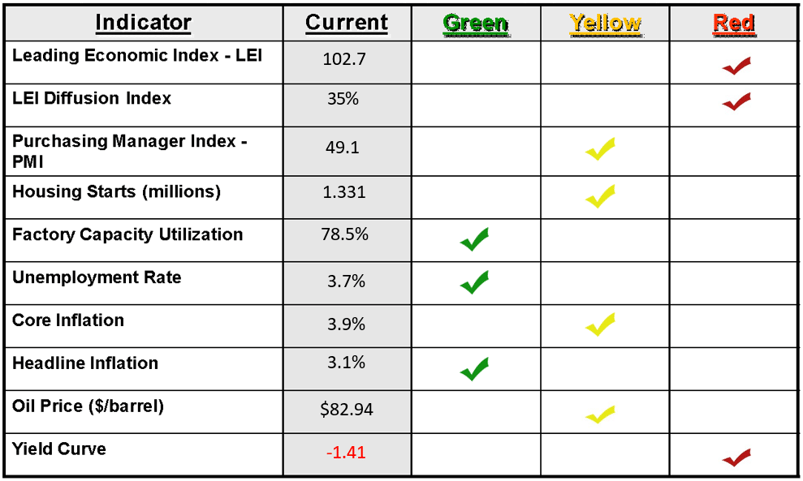
LENDER AND BUSINESS DASHBOARD ECONOMIC INDICATORS
For the month of January 2024
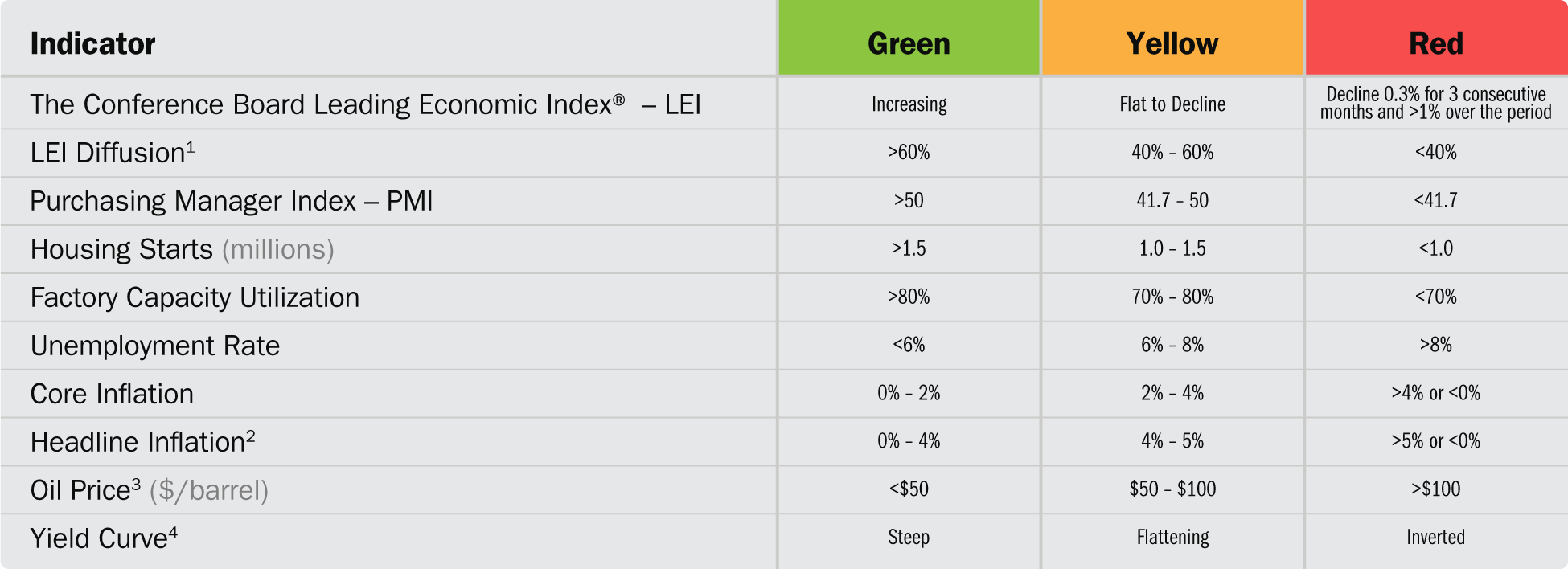
LENDER AND BUSINESS DASHBOARD ECONOMIC INDICATOR BENCHMARKS
Related Insights


Refinancing Dilemma: Lender & Borrower