


%20Net%20Yields.svg)


,%20a%20blended%20educational%20program,%20provides%20a%20vantage%20point%20for%20the%20economic%20pulse%20of%20the%20agriculture%20industry%20and%20agricultural%20lending.)

Farm Credit University (FCU), a blended educational program, provides a vantage point for the economic pulse of the agriculture industry and agricultural lending. This program is in its 20th year with over 8,000 enrollments of lending staff, producers, and academic graduates! What started as a master’s degree project has morphed into something that could not have been imagined when it was outlined on a Delta Air Lines napkin.
Recently, another FCU class met for the face-to-face conclusion of an eight-month online commercial agricultural lending program. This class was unique because the participants were located all over the country, from the East and West Coasts and from the Canadian border to the Deep South. Many of the participants had three to five years of agricultural lending experience at Farm Credit, banks, government agencies, and nontraditional lenders.
Concerns across the nation
Participants were asked, “What are your major concerns moving into the loan renewal season?”
Of course, top of mind was the rapid decline in commodity prices in the grain, fruits, and nuts sectors and other related commodities. Those primarily lending to the beef and livestock side were concerned about the length of the positive economic cycle and how producers are managing their profits. The classic “top of the economic cycle tax minimization strategy”—in other words, spend $1.00 to save $0.20 on taxes by taking on a three- to five-year debt service obligation—has many of the agricultural lenders on edge. This is a risky strategy if the cycle were to quickly correct downward.
Regardless of commodity, many were concerned about how their producers' exposures were contributing to bottom-line losses and massive reductions of working capital for those who did not execute a risk management and marketing program. Many of the West Coast lenders with larger operations in their portfolios are observing a six- and sometimes seven-figure loss of earned net worth and working capital, which leads to being downgraded in the risk rating system very quickly.
A significant discussion centered on the increase in late payments on operating notes and some real estate loans. When due diligence was conducted, such as inspections and searches on credit lines, unreported accounts payable and credit card debt were discovered. Some amounts were above $100,000 and ranged up to $500,000.
Those in drought areas or those recently affected by too much rain and wind are facing a double whammy of lower prices and yields, which create a recipe for economic losses and much more mental stress for both the borrower and lender.
Some indicated that this was the first economic downturn many borrowers, lenders, regulators, and boards of directors have faced. This is a major concern for marketplace stability. One instructor with nearly 40 years of experience indicated that it is critical not to get too high when times are good or too low when economic doldrums occur. The bottom line is that consistency is key in the agricultural lending marketplace, and lenders should be cautious of headline lending.
In the longer term, many in the class were concerned about water availability, competition from the public for water, and overall support for agriculture. Those on the West Coast indicated layer upon layer of regulation is impacting the cost of production and the viability of agriculture.
The class indicated that business transition and estate planning management may be both a challenge and opportunity. Aligning with the next generation that demonstrates a management skill set will need to be assessed with appropriate risk-based loan decision-making. Many of the loan officers indicated that relationships with the older, vintage generation had been established with lenders who are now retired. Many of the beginning producers with limited or no land collateral are conducting business with nontraditional lenders that are not so collateral-oriented.
Others commented that the next generation that is now immersed in financial and management obligations are sometimes overwhelmed by the magnitude of the numbers, particularly in larger operations. This causes mental stress for spouses and partners, which is magnified by the current and future economic situation.
Another concern with the beginning producers is competition with green energy alternatives and non-farm family members in the estate and transition management process. Seniors are being offered lucrative lifetime income deals that are even more attractive given the current economics. Nonfamily members, or as one banker calls them, “waiters,” are focused on the newfound wealth with inflated prices and land. This is difficult to pencil out even in good times, but especially during a down cycle that many are facing.
Issues
Given these concerns, what are some of the challenges that were top of mind? Training was a significant variable listed by many. They indicated that during the down cycle, training and education are among the first expenses to be cut by many financial institutions.
Others discussed the need for tough conversations with customers. The nonfinancial factors can often result in a performing loan moving to a watch list of special asset loans much more quickly than just the financial factors.
A conversation amongst the group revealed that they are often trained in numbers, or the science of lending, but more emphasis needs to be applied to the art of lending, focused on the nonfinancial factors. One lender jokingly indicated that they are a combination of an accountant, psychologist, sociologist, and communication specialist in one package.
Finally, the many loans that were made for processing and value-added businesses during the pandemic are a possible clear and present danger on the horizon. While many of the loan and grant recipients are good to excellent farmers in production agriculture, they may lack the skill and mindset required for operating and managing a value-added business. Having experience in this arena with our creamery, I know that it is critical to have a written business plan. An important part of the business plan is the operation plan that generates the numbers. The ability to plan, strategize, execute, and monitor these businesses from both a strategic and operational perspective with a strong business culture is essential.
This class provided a prelude to things to come this fall and winter. Remember, every downturn is ripe for opportunity for those focused on relationship lending with a steady hand and the ability to work with viable customers through the cycle.
Lender and Business Dashboard Economic Indicator Assessment October 30, 2024
Global Economy
A short global analysis finds that “economic chickens” are coming home to roost in China. China's government sent economic stimulus to its citizens, who have observed both housing and stock market declines of over one-third. Thus far, the stimulus has not been effective at increasing consumer spending.
Exports are down across the board in China. Russia and Southeast Asia are not importing enough Chinese goods to counter the reductions in exports to the U.S., Europe, and other countries in the West. A careful watch may be needed on tariffs, sanctions, and counter-tariffs to U.S. agriculture, as they could impact farm profitability.
Europe, Canada, and Mexico are experiencing slow economic growth. The new leader of Mexico is expected to follow her predecessor's economic plan. As a result of social spending, debt is building up in Mexico, which is the United States’ largest agricultural trading partner. The crackdown on Mexican drug cartels will need to be closely monitored for its impact on social and economic stability.
The ongoing wars are the wildcard that could impact oil prices, distribution, and trade. Will the United States continue to spend on these efforts, to what extent, and for how long? Eventually, the federal budget trade-offs could create some interesting debate, particularly after the elections.
Domestic Economy
Recently, I had the privilege to discuss the future of the U.S. economy with seven other economists and businesspeople. The predictions were made regardless of the election outcomes this fall. For transparency, this is the same group that met last year and predicted a slight recession in 2024 that did not occur.
Overall, the group predicted a conservative, slow economic growth mode for 2025 and beyond, but no recession. Most were focused on the Federal Reserve's monetary policy, expecting one more interest rate decline in 2024 and another 100 to 250 basis point reduction in 2025.
One point concerning job growth since 2020 is that 3.3 million jobs have been created; however, 10 states garnished 90% of the growth and 10 states lost the majority of the jobs. Winners included Florida, Georgia, South Carolina, North Carolina, and Texas.
The top losers were Illinois, California, and New York. It was the consensus of the group that job growth would be slower and unemployment would pick up.
Consumer sentiment, unsustainable fiscal policy, and the growth of government public debt were major concerns. Other concerns voiced by the economists included sanctions and tariffs and their impact on specific industries that are export-oriented, such as agriculture.
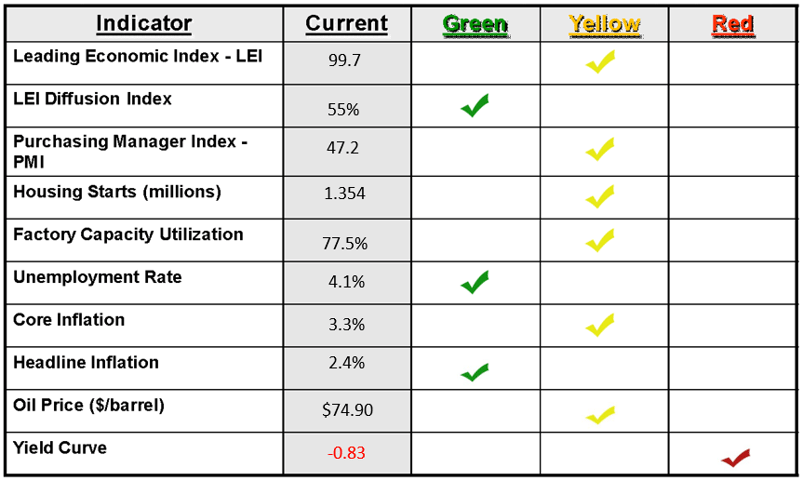
Examination of the economic indicators finds that the Leading Economic Index (LEI) is inconclusive, with mixed signals concerning growth, stability and a recessionary economy. The diffusion index has increased above 50.
The Purchasing Manager Index (PMI) is still below 50, indicating a contracting economy but above recessionary levels.
The unemployment numbers are extremely volatile and “noisy” with various changes in the methodology of calculation and reporting. While the general unemployment rate (U- 3) is strong at 4.1%, the U-6 unemployment rate, which includes those workers that are not fully employed, is 7.7% and needs to be closely monitored.
Housing starts increased to 1.354 million units annually as a result of lower interest rates; however, many individuals are still faced with housing affordability issues. Factory utilization is quite strong, but when talking with front line workers in many industries they have indicated that orders and work are slowing.
The headline inflation rate is moving downward toward the Federal Reserve's goal of 2%. The core inflation rate, which is impacted by housing costs and insurance premiums, is registering at 3.3%.
Maintain a close eye on the Index of Consumer Sentiment because consumer spending drives about 70% of the U.S. economy. This index is well below 75, which is in the “red light” area.
The following are three layers of the economy that need to be closely observed:
ALICE: Asset Limited, Income Constrained, Employed
Often with multiple jobs, the ALICE segment has increasing consumer debt and late payments. However, this group alone is not enough to create a recession.
HENRY: High Earner, Not Rich Yet
Often earning between $100,000 and $300,000 annually, the HENRY segment could put the U.S. into a recession if unemployment increases or we have an economic shock that curtails their spending. This group is very vulnerable to layoffs, automation, the return to face-to-face employment, and artificial intelligence (AI).
HERMAN: High Earner, Rich, Mobile, Appreciated Net worth
Often paper millionaires, if the HERMAN group reduces spending and investment habits and loses a portion of their paper wealth, a deep recession could occur. All three of these segments are part of consumer behavioral economics that are likely to have a large influence on the economy.
LENDER AND BUSINESS DASHBOARD ECONOMIC INDICATORS
For the month of September 2024
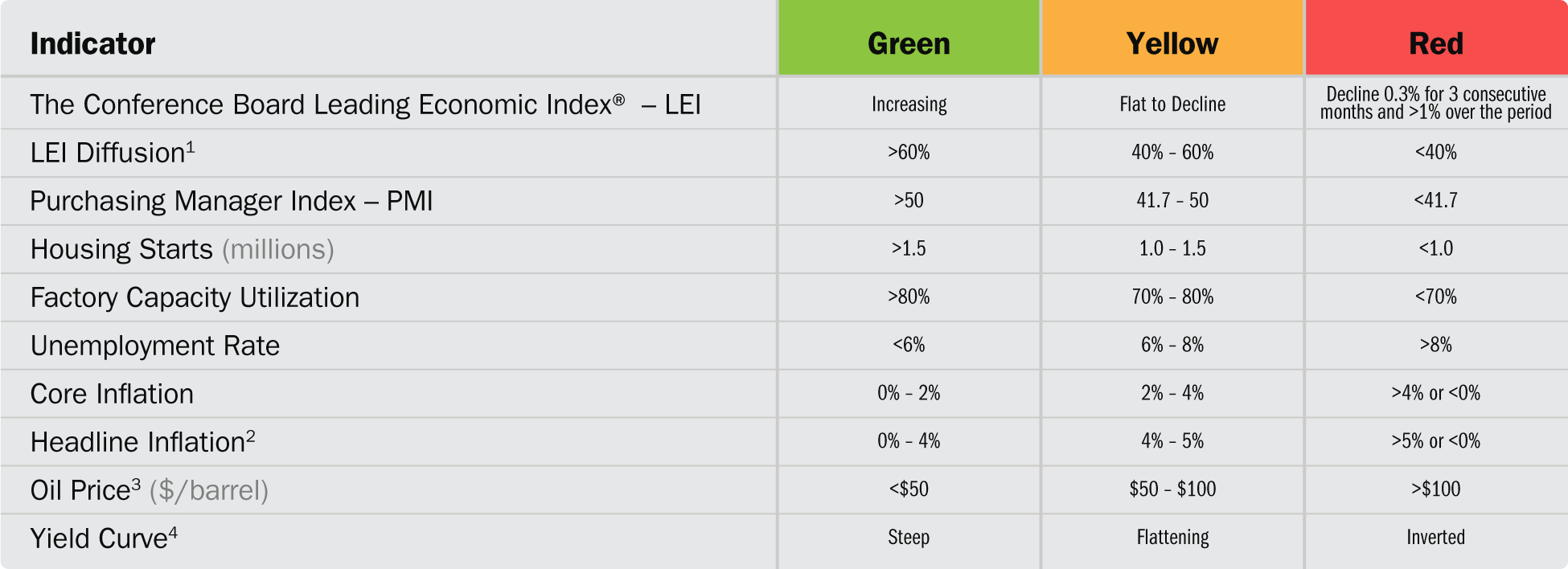
LENDER AND BUSINESS DASHBOARD ECONOMIC INDICATOR BENCHMARKS
Related Insights


Refinancing Dilemma: Lender & Borrower