


%20Net%20Yields.svg)


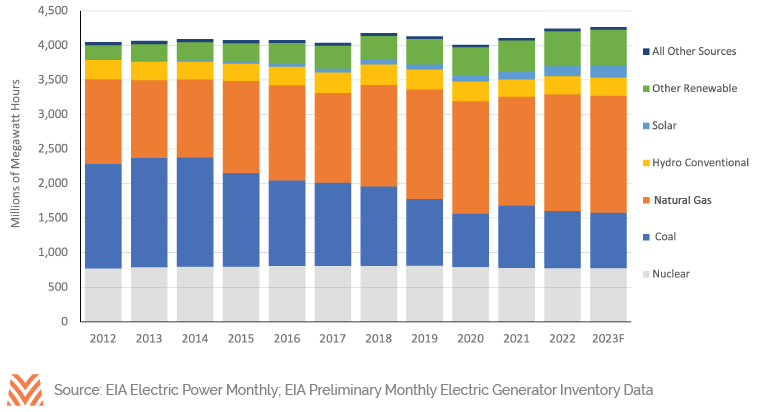
America’s energy production industry, once dominated by coal-fired plants, is now rooted in combined-cycle natural gas power and renewables like wind and solar. Between 2012 and 2022, the net generation of utility-scale power generated by coal power plants fell by more than 680 million megawatt hours, or roughly 45% of all coal-fired power production. That production was more than offset by an increase of more than 450 million megawatt hours of natural gas power production (37% increase) and more than 400 million megawatt hours of renewables (200% increase).
The retirement of coal plants from 2014 to 2020 was largely driven by economic forces. Cheap and abundant natural gas improved the profitability and investment payback on new power capacity while increasing regulations and steady coal prices slowly increased the cost of power production from coal. Meanwhile, technology for solar and wind power production and storage continued to improve, decreasing the levelized cost of renewable power production (the breakeven cost of electricity for a power source over its lifetime) to be competitive with natural gas.
This rapid change in the U.S. power mix slowed considerably in 2021 and 2022 due to numerous market dynamics. First, cheap natural gas reduced investor returns on new well exploration and processing. Second, supply chains for solar and wind projects were highly disrupted by the COVID-19 pandemic. And third, the Russian invasion of Ukraine and subsequent sanctions against Russian energy exports drove up global energy prices, especially for natural gas. Since 2020, natural gas-fueled electricity has been steady, with fewer megawatts of production scheduled for retirement but also fewer new plants planned to open. Instead, much of the new net generation capacity has come from wind production, with small-scale solar projects gaining momentum in 2022.
Power Prices and Future Power Mix
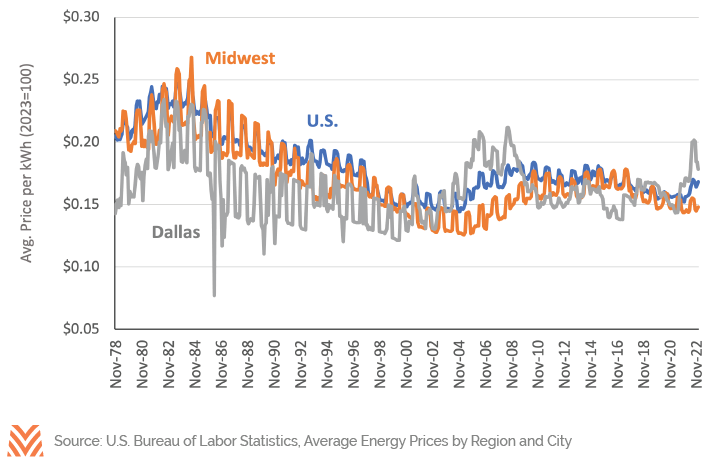
Changing energy prices had a significant impact on electricity prices in 2021 and 2022. U.S. average retail electricity prices increased by 21% between December 2020 and December 2022, outpacing inflation by more than 6% during that time frame. In Texas, a state with a high concentration of natural gas-based electricity, the increase was more than 40%. However, in regions with a higher mix of renewable power production, like the Midwest, electricity prices increased at a slower rate of 14%, or at roughly the same pace of inflation. These data suggest that a more diverse mix of fuels decouples some of the relationships between retail electricity prices and energy prices.
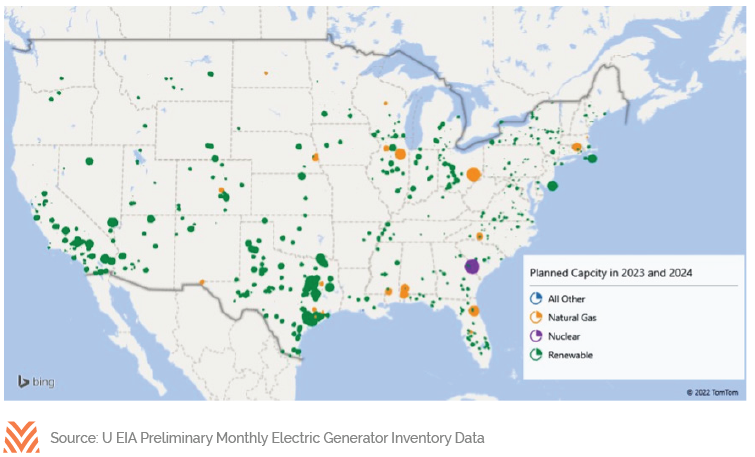
Looking forward, much of the planned capacity for U.S. power generation is coming from renewable sources; primarily solar and battery storage. In fact, approximately 75% of the registered investment in power production for 2023 and 2024 is in solar photovoltaic and battery technology. That said, solar projects tend to be much smaller in scale compared to gas, wind, and nuclear. The average generating capacity of planned solar projects in the next two years is 88 megawatts, compared to 496 megawatts for gas projects and 1,114 megawatts for nuclear power projects. The increase in distributed power generation improves grid resiliency, but the tradeoff is complexity and technology. Rural power providers will likely need to continue to raise the bar on the capabilities of our nation’s increasingly complex power systems in order to meet future demand, minimize costs, and maximize power safety and security.
Related Insights


Refinancing Dilemma: Lender & Borrower